



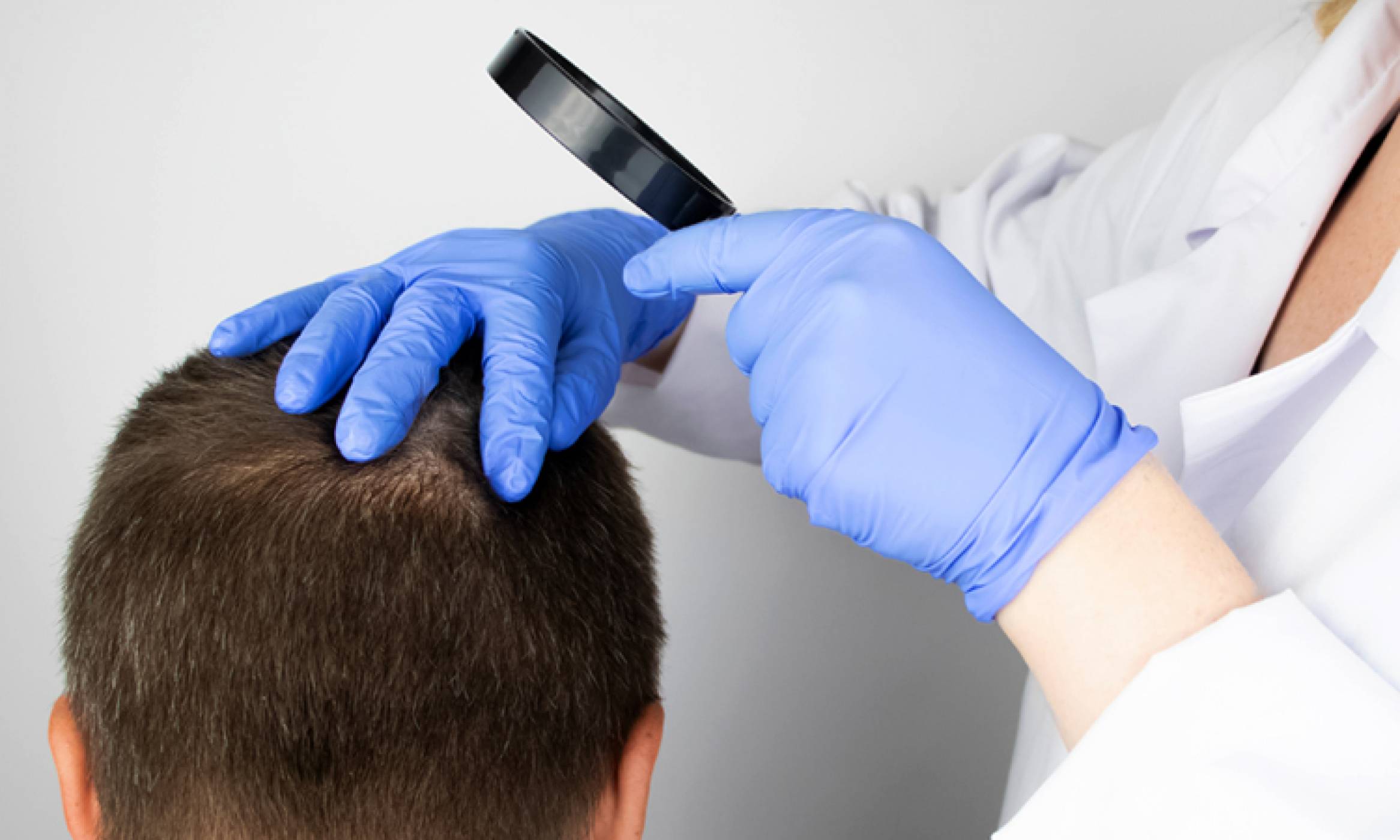
Personalized Hair Thinning & Hair Loss Treatment for Men

Personalized Hair Thinning & Hair Loss Treatment for Men
Receding hairline, crown thinning, or increased shedding? At Springs Hair Restoration, Dr. Zack Charkawi builds personalized treatment plans within a physician-led practice focused on accurate diagnosis, long-term planning, and natural-looking outcomes.
Most men have androgenetic alopecia — male-pattern baldness. Other contributors can include:
• Stress (telogen effluvium) Hormonal/thyroid issues
• Medications with hair-loss side effects
• Scalp conditions or scarring alopecia
Accurate diagnosis comes first—treatment depends on the cause.
Male-pattern hair loss, also called androgenetic alopecia, is the most common cause of hair loss in men. It occurs when hair follicles are genetically sensitive to dihydrotestosterone (DHT), a hormone derived from testosterone. Over time, affected follicles gradually miniaturize, producing thinner and shorter hairs until growth may eventually stop altogether.
The pattern often begins with temple recession, a receding hairline, or crown thinning and can start as early as the late teens or early 20s. For many men, it becomes more noticeable in the 30s and 40s. A family history on either side may increase the likelihood of developing male-pattern hair loss, as the condition is influenced by genes from both parents.
Because the condition is progressive, early evaluation matters. Medical therapy may help slow or stabilize miniaturization, while surgical restoration can help restore density and refine the hairline once thinning has become more advanced.
• Receding hairline (often an “M” shape)
• Crown thinning / widening part
• More shedding on pillow, brush, or in the shower
• Miniaturized hairs along the hairline
Temporary: shedding after illness, stress, or meds (telogen effluvium), usually reverses once the trigger resolves.
Progressive: male pattern hair loss; treat early to slow miniaturization.
Scalp Scarring: needs urgent evaluation to prevent permanent loss.
Hair transplantation may be recommended when hair loss has stabilized and medical therapy alone is unlikely to provide the coverage or density you’re looking for.
• FUE and No-Shave FUE techniques allow for discreet harvesting and shorter hairstyles with minimal visible scarring.
• FUT may be recommended for patients who need higher graft counts or have specific donor-area considerations.
We recommend surgery only when it aligns with your long-term goals, and every surgical plan is paired with a strategy to help maintain existing hair over time.
→ Explore hair transplant options
For many men, the right starting point is medical therapy to support the hair growth cycle before considering surgery. Dr. Charkawi builds a personalized plan based on your diagnosis, stage of hair loss, and long-term goals — not a one-size-fits-all protocol.
• Physician-guided supplements and oral therapies oral therapies may help support fuller-looking hair by addressing factors that influence the hair growth cycle from within.
• Customized topical and scalp-applied treatments can help support regrowth while improving scalp health and follicle function.
• Advanced options like Regenera Activa use your body’s own tissue to help support follicle health and density in targeted areas of thinning.
• When dryness, buildup, or inflammation contribute to thinning, treatments like Keravive by Hydrafacial help restore a healthier scalp environment for hair growth.
Your treatment plan is designed around your goals, hair characteristics, and how your hair responds over time.
→ Explore non-surgical hair loss treatments
• Detailed history (family, medications, timelines)
• Scalp/follicle exam (trichoscopy)
• Targeted labs when indicated (e.g., thyroid, nutrition)
• Biopsy if a scarring process is suspected
You’ll leave with a clear plan, even if surgery isn’t the first step.
Evidence-based therapies to slow miniaturization and support regrowth; we tailor dose, delivery, and monitoring.
FUE (including no-shave) or FUT; hairline refinement that respects your hair type and goals; scar revision when needed.
Long-term follow-up to protect native and transplanted hair with a plan you can stick to.
Explore hair transplant solutions in Atlanta including FUE, No-Shave FUE, and FUT techniques.
• Physician-led care focused on diagnosis first, not one-size-fits-all treatment
• Led by Dr. Zack Charkawi with meticulous, natural-looking outcomes
• Surgical and non-surgical options tailored to your stage of hair loss
• Honest candidacy assessments and long-term planning
• Clear communication, realistic expectations, and structured follow-up care
• Family-owned practice focused on education, trust, and continuity of care
Our locations in Sandy Springs and Johns Creek are easily accessible in the Metro Atlanta and Greater Atlanta areas, including Atalnta, Alpharetta, Cumming, Roswell, Duluth, Dunwoody and Marrietta
How long is the recovery after a FUE hair transplant?
Most patients return to work within a few days, and the donor area typically heals quickly with minimal discomfort.
Are “natural” remedies enough for early hair loss?
Some supplements and oils have limited or mixed evidence. They may support scalp health, but they rarely replace medical therapy. We’ll review your case and only recommend what’s appropriate.
Do hats cause baldness?
No. Hats do not cause hair loss. Genetics, DHT sensitivity, illness, medications, and scarring conditions are the common drivers.
Does hair loss only come from your mother’s side?
No. Male pattern hair loss is polygenic (influenced by genes from both sides of the family).
Does high testosterone cause hair loss?
Not directly. The key factor is follicle sensitivity to DHT (a derivative of testosterone) plus the enzyme activity that converts testosterone to DHT.
How can I prevent or slow hair loss day-to-day?
Use gentle hair care (avoid tight styles/harsh heat), manage stress and sleep, address medical triggers early, and stay consistent with your prescribed plan, we’ll monitor and adjust.
Am I a candidate for a hair transplant?
You might be if you have stable hair loss, realistic goals, and adequate donor hair. We’ll evaluate candidacy during your consultation and may recommend medical therapy first.
Long Post Alert...but worth the read! - A few months ago, I decided to consider a hairline transplant in Atlanta. After doing some research, I became interested in the FUT process. I was still determining where to begin, so I initially went to what I had seen for years on TV, Bosley. The consultation was excellent, but I felt too many people between me and the surgeon performing the procedure. I wanted that direct interaction to ensure I got what I wanted in my design. I went to a second, Dr. P, but it wasn’t the right fit for me, then I was referred to Dr. Zack Charkawi. From the moment I sat down with him at his desk, I knew he was the one. CONTINUE READING REVIEW
As a healthcare provider, I am very particular who I choose for my own healthcare needs. I completed my 4th hair restoration procedure with Dr. Zach, and I am extremely pleased with the outcome. Dr. Zach's professionalism was evident at my initial consultation, where he spent time discussing the procedure, pertinent research, and most importantly the realist expectations; he did not "over sell" the procedure. He also is the only practitioner that I am aware of who uses a specific anesthesia technique that dramatically decreased the procedural discomfort. He was very thorough during the procedure, covering all of the necessary areas. I highly recommend him and his staff without reservations!
My husband had a fantastic experience with Dr.Zack! It took him a while to find the best doctor for hair transplant. He had many consultations before choosing his clinic. The polish and professionalism of Dr. Zack and his team is excellent! My husband was very happy with the results of the procedure. We could never have asked for a better experience! I will be highly recommending him to my friends!
Dr Charkawi was fantastic. He really made me feel at ease and went above and beyond to make sure that I was happy with my hair. Also it’s a beautiful, clean office with a sister location for follow ups or further needs which is very helpful. Overall very satisfied customer.
Long Post Alert...but worth the read! - A few months ago, I decided to consider a hairline transplant in Atlanta. After doing some research, I became interested in the FUT process. I was still determining where to begin, so I initially went to what I had seen for years on TV, Bosley. The consultation was excellent, but I felt too many people between me and the surgeon performing the procedure. I wanted that direct interaction to ensure I got what I wanted in my design. I went to a second, Dr. P, but it wasn’t the right fit for me, then I was referred to Dr. Zack Charkawi. From the moment I sat down with him at his desk, I knew he was the one. CONTINUE READING REVIEW
* By submitting this form, I authorize Springs Hair Restoration to contact me by phone or text utilizing automated dialing equipment, as well as by email with information about appointments, products, services, news or promotions. I also agree to Springs Hair Restoration’s Privacy Policy.



 Free Transplant Consult